Maggi Hambling
The Suffolk Artist Who Brought the Storm to the Coast
Suffolk Artists: Made in Suffolk
There’s a version of the Suffolk coast people like to believe in. And then there’s Maggi Hambling’s.
In contrast to the calm and serene landscapes so often painted and praised, Maggi looked at the same scene and brought out the storm within.
What others chose to soften, she wildly stated. Capturing the coast shifting and eroding, through trumbulent, abstract angles, with its unpredictability dragged out in dashes of bold colour.
We are in awe of the eccentricity of this woman. Maggi is the embodiment of an artist; she’s wild, unfiltered, and completely unafraid. Her paintings feel exposed, almost naked – raw and immediate. They crash onto the space unrelenting and completely drenched in emotion, bearing the full weight of movement, tension, and force.
Nothing about her work is polite. Paint seems to invade the canvas in an abundance of texture, thick and restless, as the waves they capture.
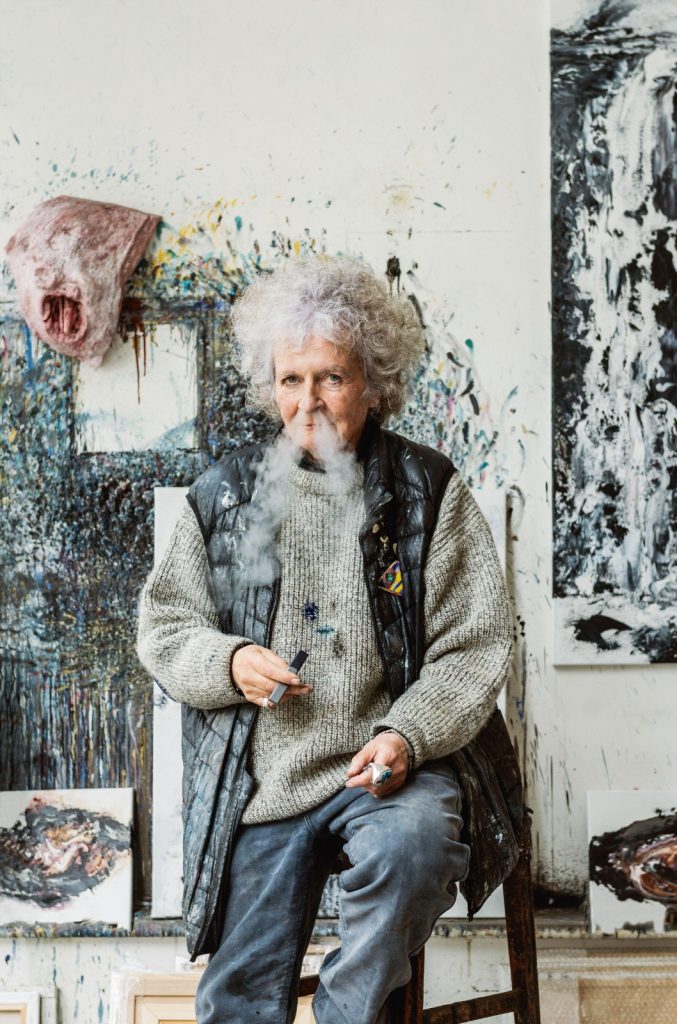
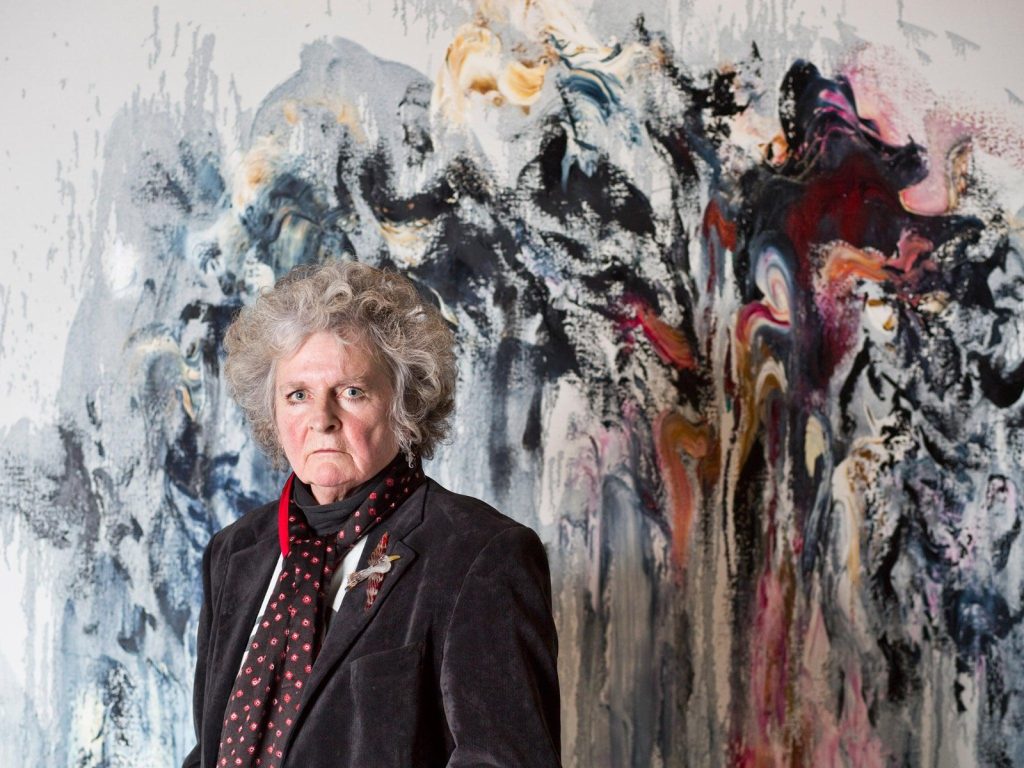
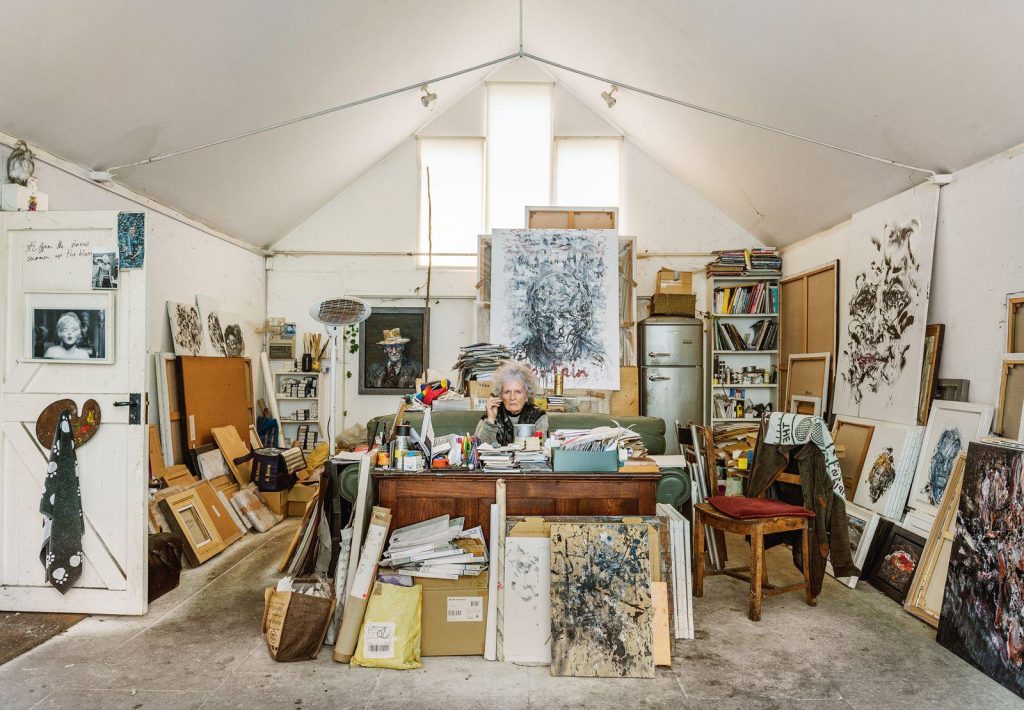
In her works, the Walls of Water series, the North Sea is an unbeatable force. Thick, urgent brushstrokes are dragged and hurled across the canvas, as if the painting itself is trying to keep up with something it can’t contain. Her spectacular use of texture, applied with her rich, dense, almost sculptural skill with colour, pulls you into the weight and motion of the wave – that you don’t just see it, you feel it coming.
But just who is this remarkable woman?!
Born in 1945, just up the road in Hadleigh, Maggi Hambling didn’t drift into art- she attacked it. From an early age, she was already pushing against expectations, painting with a distinctive intensity. As Hambling herself puts it, “Painting is about intensity.” She trained under Cedric Morris at the East Anglian School of Painting and Drawing, where her individuality was nurtured rather than restrained.
Though she went on to study at Camberwell and the Slade, Hambling was never one to be shaped by institutions. As she has said, “I don’t paint what I see. I paint what I feel.”
Those environments seem to have only sharpened her defiance. By 1980, she became the first artist-in-residence at London’s National Gallery- proving that she wasn’t just another polite painter from the provinces, but a force carving out her own path.
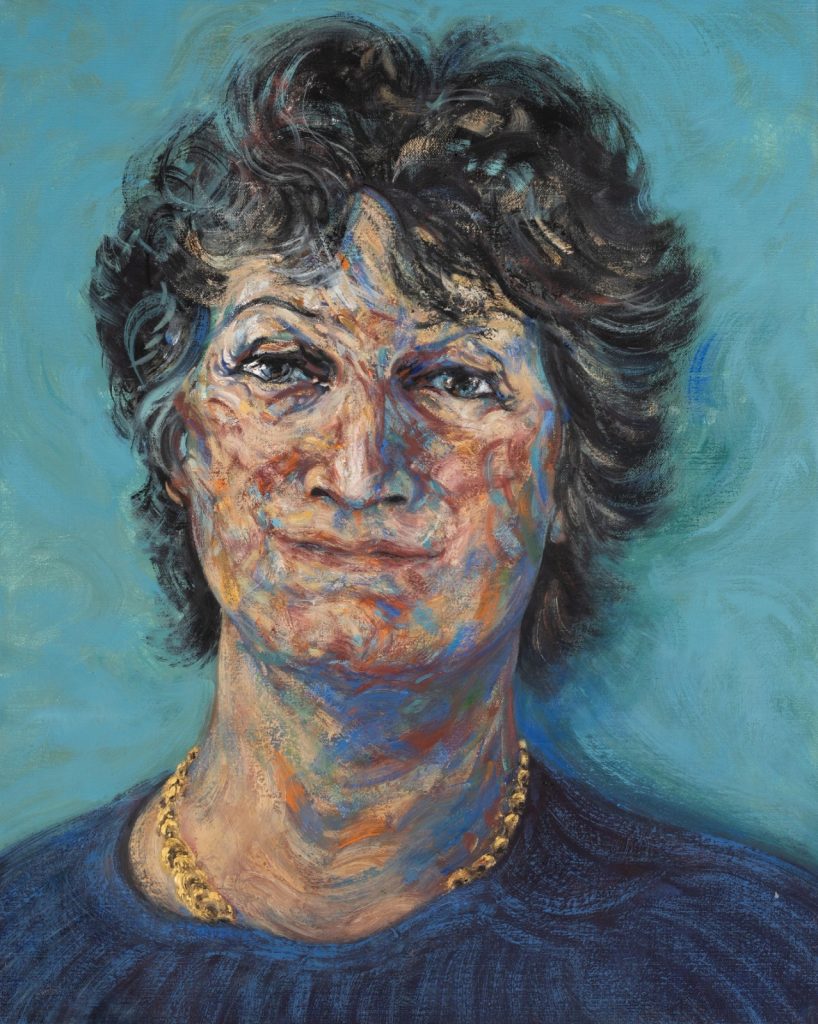
And then there are Hambling’s portraits.
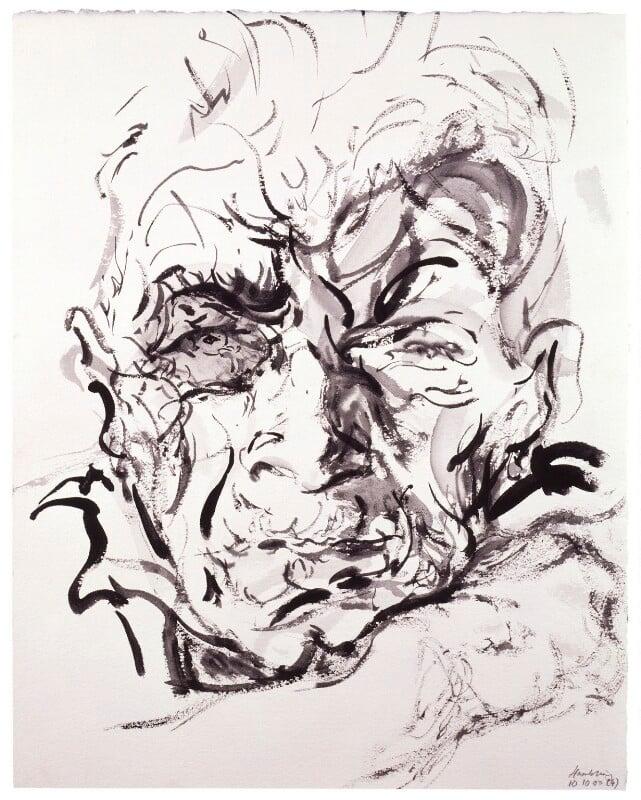
Hambling painted portraits of figures like Francis Bacon and George Melly often from memory. They pulse with something internal, unstable, and alive. capturing something far more honest.
Her connection to Bacon, in particular, runs deeper than subject matter. She admired his refusal to prettify anything, his ability to drag the human condition into the light, however uncomfortable it might be. You can feel that influence in her work: the distortion, the emotional charge, the sense that what you’re looking at is shifting, in generous layers of movement and expression.
But Hambling isn’t an echo of Bacon, she’s her own storm entirely.
Her personality is as uncompromising as her paintings. Known for her sharp wit, her refusal to dilute her voice, and her resistance to the art world’s expectations, she has never been interested in fitting neatly into anything. She paints obsessively, often returning to her most anamalized subject – the sea.
She’s never shied away from controversy.
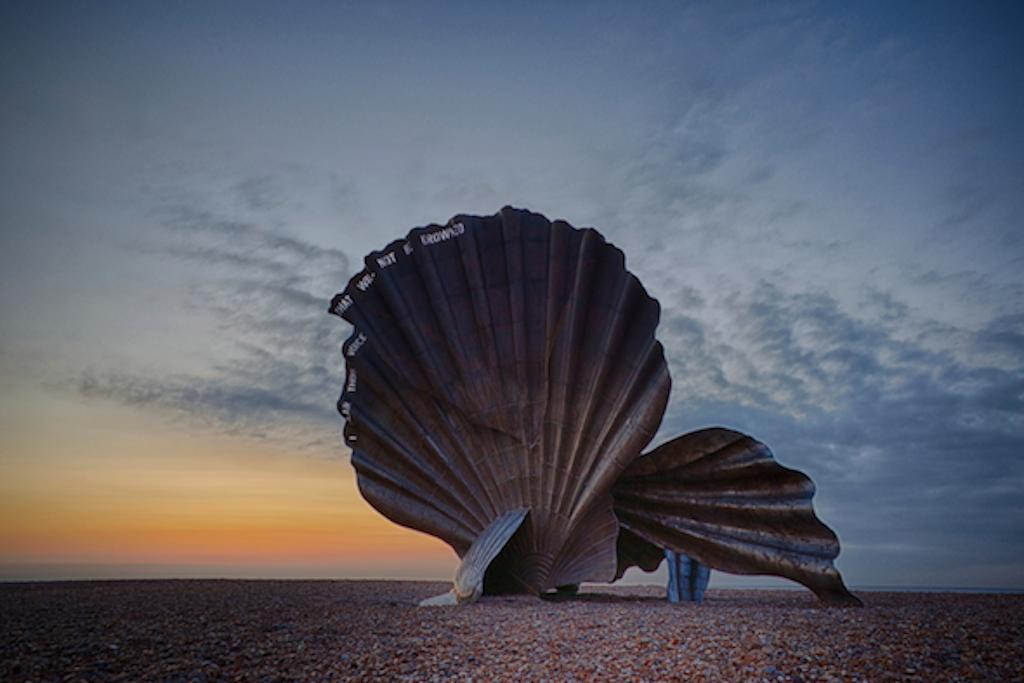
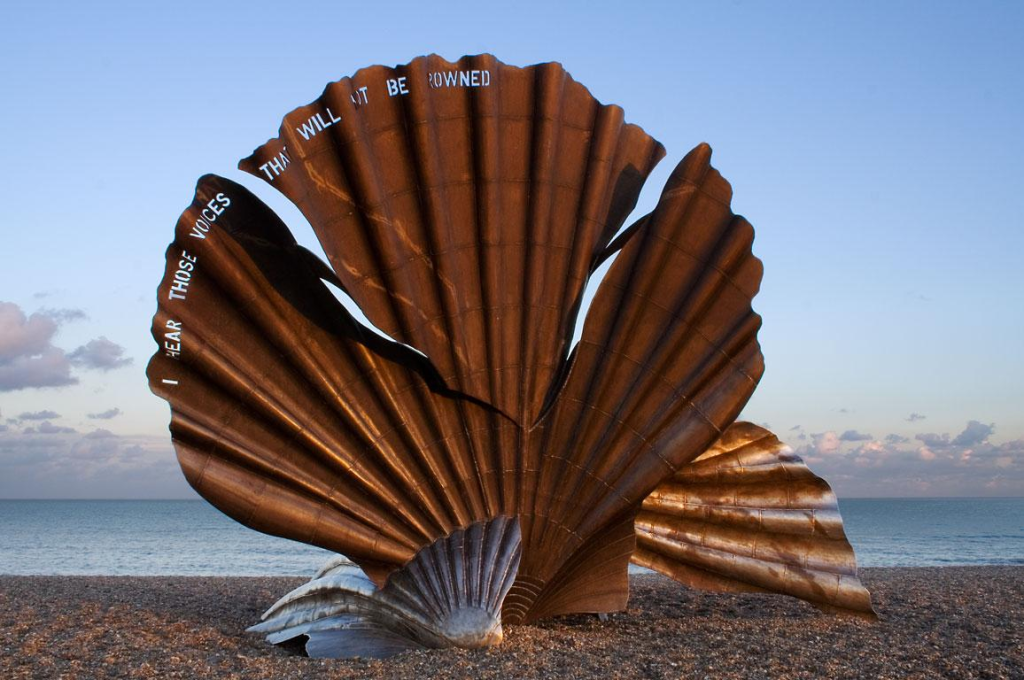
Her public sculpture Scallop on Aldeburgh beach – dedicated to Benjamin Britten – was repeatedly vandalised when it was first installed. But Hambling didn’t retreat. If anything, it cemented her position as an artist willing to provoke, to disrupt, and to stand her ground when people didn’t immediately understand the work.
Even her Conversation with Oscar Wilde, broke the distance between subject and viewer. And in 2020, her Sculpture for Mary Wollstonecraft, sparked debate, discomfort, and argument. Not because it failed, but because it refused to conform to what people expected a monument to be.
What makes her so vital is she doesn’t paint what people want to see – she paints what she feels is there. Reaching into deeper currents, revealing the storm within us. The restless, the immense, hidden beneath the calm.
What we especially love about Maggi Hambling’s work is that doesn’t just sit quietly on the wall – it moves, and confronts you.
We’ve dedicated this piece in her honour – to celebrate a Suffolk artist who refuses to be softened, and the inspiration she continues to leave in her wake.
Thank you, Maggi Hambling – for being a brilliant, unrefined tide.
To find out more about the artist: